BMI Calculator with Age: How Age Affects Your BMI Results (2026)
While the BMI calculation formula stays the same throughout adulthood, using a BMI calculator with age gives you much more meaningful results. This is because your body composition naturally changes as you get older.
In this complete guide, you’ll learn how age affects BMI interpretation, what healthy ranges look like at different life stages, and how to use this information effectively.
Why Age Matters When Calculating BMI
The standard BMI formula is:
BMI = weight (kg) ÷ [height (m)]²
However, the health implications of your BMI score change with age due to:
- Natural muscle loss (sarcopenia)
- Changes in metabolism
- Shifts in fat distribution
- Hormonal changes
This is why many people prefer a bmi calculator with age for better context.
How BMI Interpretation Changes with Age
Ages 20–39
- Muscle mass is usually at its highest.
- Standard BMI categories (18.5–24.9) are most accurate.
- A BMI over 25 generally indicates excess body fat.
Ages 40–59
- Muscle mass begins to decline without regular strength training.
- A BMI in the “overweight” range may partly reflect muscle loss.
- Waist circumference becomes increasingly important.
Age 60+
- Muscle loss accelerates.
- A slightly higher BMI (up to 27–28) can sometimes be protective.
- Very low BMI becomes more concerning due to frailty and health risks.
Practical Examples by Age Group
Example 1: 32-Year-Old
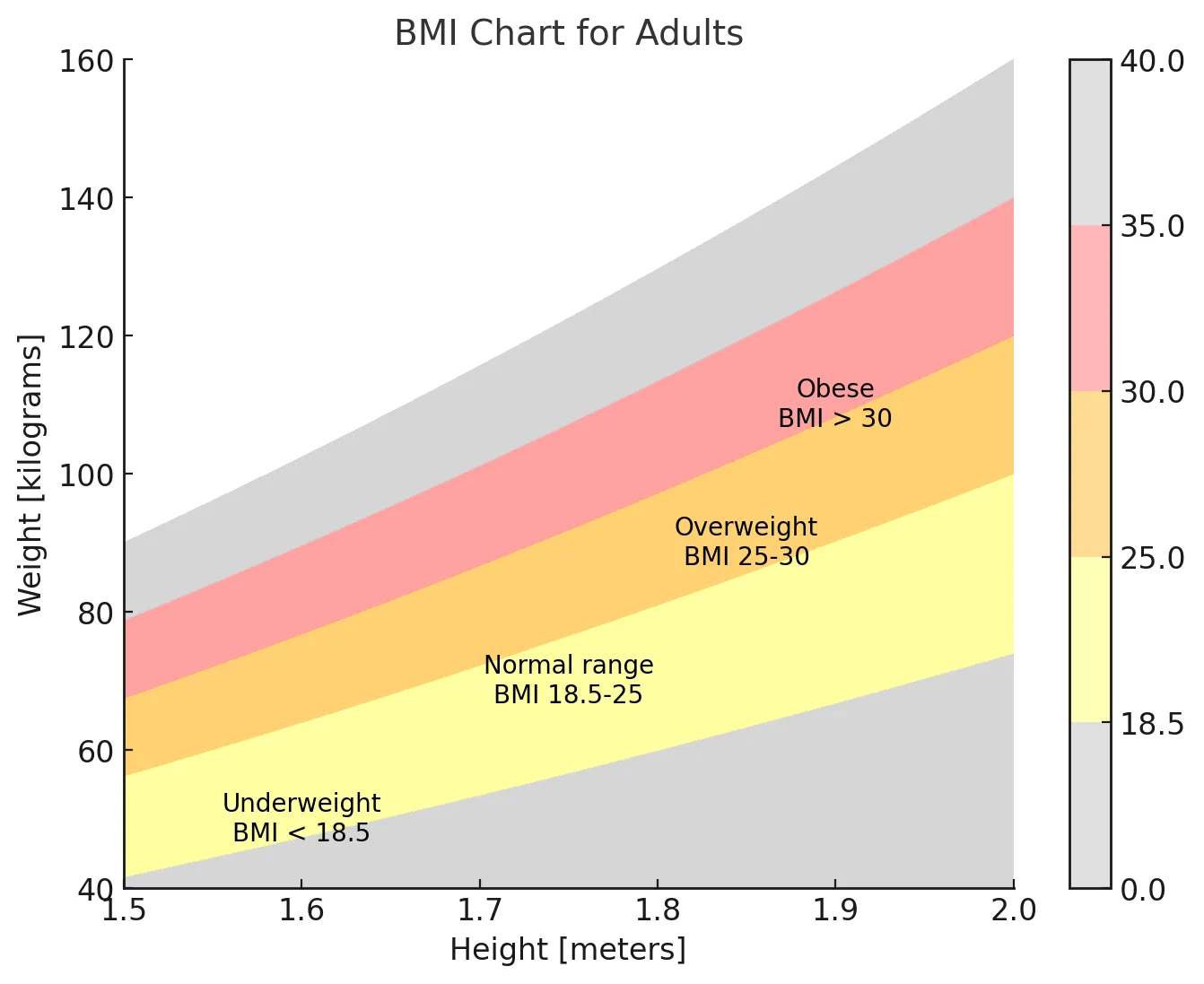
- Weight: 80 kg, Height: 1.75 m → BMI = 26.1 (Overweight) → Likely indicates excess fat. Lifestyle changes recommended.
Example 2: 48-Year-Old
- Weight: 80 kg, Height: 1.75 m → BMI = 26.1 (Overweight) → May partly reflect muscle loss. Check body fat % and waist measurement.
Example 3: 65-Year-Old
- Weight: 80 kg, Height: 1.75 m → BMI = 26.1 (Overweight) → Often acceptable at this age if muscle is maintained and overall health is good.
Best Practices When Using a BMI Calculator with Age
- Track trends over time rather than single readings.
- Combine with waist circumference — especially important after age 40.
- Measure body fat percentage for more accurate body composition.
- Prioritize strength training as you age to preserve muscle.
- Consult a doctor for personalized interpretation, especially after age 50.
Recommended Tools
Frequently Asked Questions
Does the BMI formula change with age? No. The formula stays the same. Only the interpretation and ideal ranges shift.
Is a higher BMI better after 60? A moderately higher BMI can be protective in older age, but it should come from muscle rather than excess fat.
How often should I check my BMI with age in mind? Every 3–6 months is recommended, especially after age 40.
Ready to check your BMI? Use Our Free BMI Calculator →