How to Track Your Health Beyond BMI – Better Metrics to Use in 2026
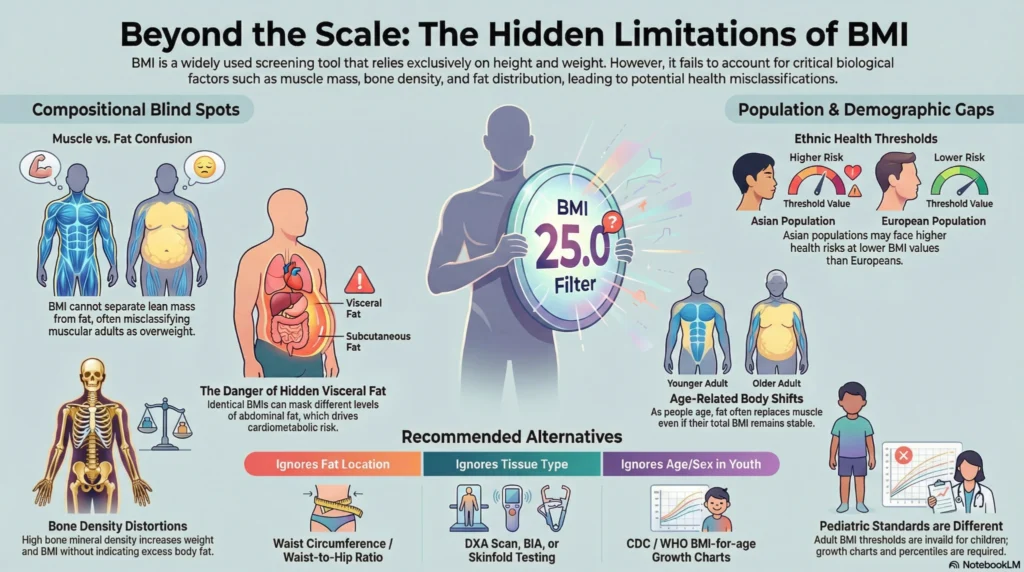
While BMI is a useful starting point, it has clear limitations. It doesn’t distinguish muscle from fat, doesn’t show fat distribution, and can be misleading for many people.
In 2026, smart health tracking goes beyond BMI. In this guide, you’ll learn the best alternative and complementary metrics to get a complete picture of your health.
Why BMI Alone Is Not Enough
BMI only uses height and weight. It cannot tell you:
- How much of your weight is muscle vs fat
- Where your fat is stored (visceral fat is more dangerous)
- Your overall fitness level or metabolic health
This is why combining BMI with other metrics gives much better insights.
Best Metrics to Track Beyond BMI
1. Body Fat Percentage
This shows the actual proportion of fat in your body — much more useful than BMI for tracking fitness and health progress.
Tools: DEXA scans, InBody, smart scales, or our Body Fat Calculator.
2. Waist Circumference & Waist-to-Height Ratio
Measuring your waist is one of the simplest and most effective ways to assess visceral fat and health risk.
General Guidelines:
- Men: Waist under 40 inches (102 cm)
- Women: Waist under 35 inches (88 cm)
3. BMR (Basal Metabolic Rate)
Knowing how many calories your body burns at rest helps with nutrition planning far better than BMI alone.
4. Ideal Weight Range
Our Ideal Weight Calculator gives a more personalized target based on height and frame.
5. Overall Metabolic Health Markers
Blood pressure, fasting glucose, cholesterol, and inflammation markers often tell more about health than weight alone.
Recommended Combination for Best Results
For the most accurate health assessment, track these together:
| Metric | What It Measures | Accuracy Level | Recommended Tool |
|---|---|---|---|
| BMI | Weight relative to height | Low–Medium | BMI Calculator |
| Body Fat % | Actual fat percentage | High | Body Fat Calculator |
| Waist Circumference | Visceral fat risk | High | Measuring tape |
| BMR | Daily calorie needs | High | BMR Calculator |
| Waist-to-Height Ratio | Central obesity risk | High | Simple calculation |
How Often Should You Track These Metrics?
- BMI: Every 4–8 weeks
- Body Fat %: Every 4–8 weeks
- Waist Circumference: Every 2–4 weeks
- BMR: Every 8–12 weeks (or when weight changes significantly)
Final Thoughts
BMI is a helpful screening tool, but it should never be used in isolation. By tracking additional metrics like body fat percentage, waist circumference, and BMR, you get a much clearer and more actionable picture of your health.
Focus on how you feel, your energy levels, strength, and long-term habits — not just the numbers.
Ready to get a more complete picture? → Calculate Your BMI → Check Your Body Fat → Calculate Your BMR