Common Mistakes When Calculating BMI and How to Avoid Them (2026)
Calculating your BMI seems simple, but many people make small errors that lead to inaccurate results. These mistakes can cause unnecessary worry or false reassurance about health.
In this guide, you’ll learn the most common mistakes when calculating BMI and exactly how to avoid them for accurate results.
Calculate Your BMI Correctly →
1. Using the Wrong Units
This is one of the most frequent errors.
Mistake: Mixing metric and imperial units (e.g., using kg with inches, or lbs with cm).
How to Avoid:
- Use the metric formula with kg and meters, or
- Use the imperial formula with lbs and inches.
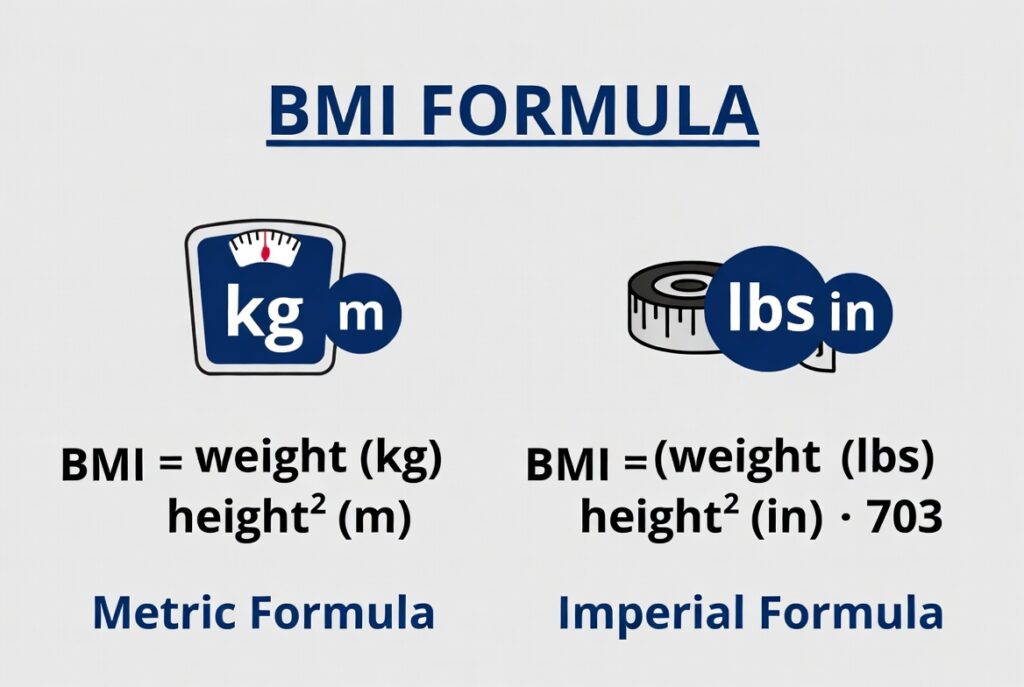
Metric Formula: BMI = weight (kg) ÷ [height (m)]²
Imperial Formula: BMI = [weight (lbs) ÷ height (in)²] × 703
2. Forgetting to Square the Height
Many people divide weight by height instead of height squared.
Mistake Example: 70 kg ÷ 1.70 m = 41.2 (incorrect)
Correct Calculation: 70 ÷ (1.70 × 1.70) = 24.22 (correct)
How to Avoid: Always square the height first before dividing.
3. Using Height in Centimeters Instead of Meters
Mistake: Using 170 cm instead of 1.70 m in the metric formula.
How to Avoid: Convert cm to meters by dividing by 100.
Example: 165 cm = 1.65 m
4. Rounding Too Early
Rounding numbers in the middle of the calculation can change the final result.
How to Avoid: Keep full decimals until the final step, then round to one or two decimal places.
5. Misinterpreting the Results
Even with a correct calculation, people often misinterpret what the number means.
Common Misinterpretation:
- Assuming a “normal” BMI means perfect health
- Thinking a high BMI always means excess fat (can be muscle)
- Ignoring age, gender, and muscle mass
How to Avoid: Remember that BMI is a screening tool, not a complete health assessment. Combine it with waist circumference, body fat percentage, and overall fitness.
6. Not Updating Calculations Regularly
BMI changes as weight and (sometimes) height change. Using old data gives misleading results.
How to Avoid: Recalculate every 4–8 weeks when actively working on weight or fitness goals.
7. Using BMI Alone for Athletes or Older Adults
Mistake: Relying only on BMI for very muscular people or seniors.
How to Avoid: Use additional metrics:
- Body fat percentage
- Waist circumference
- Muscle mass measurements
8. Comparing Results from Different Calculators
Not all online calculators use the same rounding or formula variations, which can cause slight differences.
How to Avoid: Use a reliable, consistent calculator and focus on trends rather than small differences.
Best Practices for Accurate BMI Calculation
- Use consistent units (metric or imperial).
- Double-check height conversion.
- Square the height before dividing.
- Track trends over time.
- Combine BMI with other health metrics.
- Consult a doctor for personalized interpretation.
Recommended Tools
Final Thoughts
Avoiding these common mistakes will help you get accurate BMI results and use them effectively as part of your health journey. Remember — BMI is a useful starting point, but it works best when combined with other measurements and professional advice.
Ready to calculate your BMI correctly? Use Our Free BMI Calculator →