BMI Calculation Formula: Complete Guide with Metric & Imperial Examples (2026)
Understanding the BMI calculation formula is the foundation of using any BMI calculator effectively. Whether you prefer metric (kg and cm) or imperial (lbs and inches), knowing how the formula works helps you get accurate results and avoid common mistakes.
In this complete guide, you’ll learn both formulas, see detailed examples, and understand how to calculate BMI correctly in any situation.

What is the BMI Calculation Formula?
BMI (Body Mass Index) is calculated using a simple mathematical formula that compares your weight to your height.
There are two main versions of the formula:
1. Metric BMI Formula (Recommended)
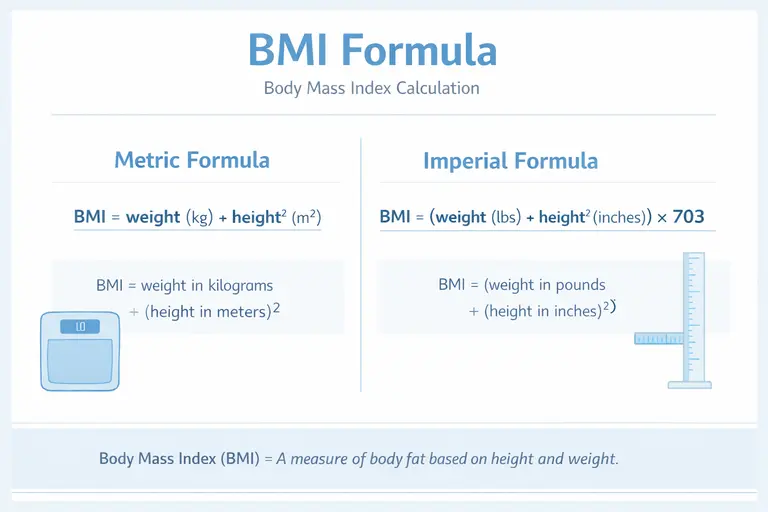
BMI = weight (kg) ÷ [height (m)]²
This is the most commonly used formula worldwide.
2. Imperial BMI Formula
BMI = [weight (lbs) ÷ height (in)²] × 703
The number 703 is a conversion factor that makes the imperial formula equivalent to the metric one.
Step-by-Step: How to Calculate BMI (Metric)
Example 1: Woman
- Weight: 68 kg
- Height: 1.62 m
Step 1: Square the height 1.62 × 1.62 = 2.6244
Step 2: Divide weight by height squared 68 ÷ 2.6244 ≈ 25.91
Result: BMI = 25.91 → Overweight
Example 2: Man
- Weight: 92 kg
- Height: 1.78 m
Step 1: Square the height 1.78 × 1.78 = 3.1684
Step 2: Divide weight by height squared 92 ÷ 3.1684 ≈ 29.04
Result: BMI = 29.04 → Overweight
Step-by-Step: How to Calculate BMI (Imperial)
Example 3: Woman (Imperial)
- Weight: 150 lbs
- Height: 5’5″ (65 inches)
Step 1: Square the height 65 × 65 = 4,225
Step 2: Divide weight by height squared 150 ÷ 4,225 ≈ 0.0355
Step 3: Multiply by 703 0.0355 × 703 ≈ 24.96
Result: BMI = 24.96 → Healthy Weight
BMI Calculation Formula Summary
| Unit System | Formula | Conversion Factor | Best For |
|---|---|---|---|
| Metric | weight (kg) ÷ height(m)² | None | Most countries |
| Imperial | [weight (lbs) ÷ height(in)²] × 703 | × 703 | United States |
Both formulas give the same result when used correctly.
Common Mistakes When Calculating BMI
Here are frequent errors people make:
- Using height in centimeters instead of meters (metric)
- Forgetting to square the height
- Using the wrong conversion factor in imperial formula
- Rounding too early in calculations
- Not using consistent units
Pro Tip: Always double-check your units before calculating.
BMI Categories (Quick Reference)
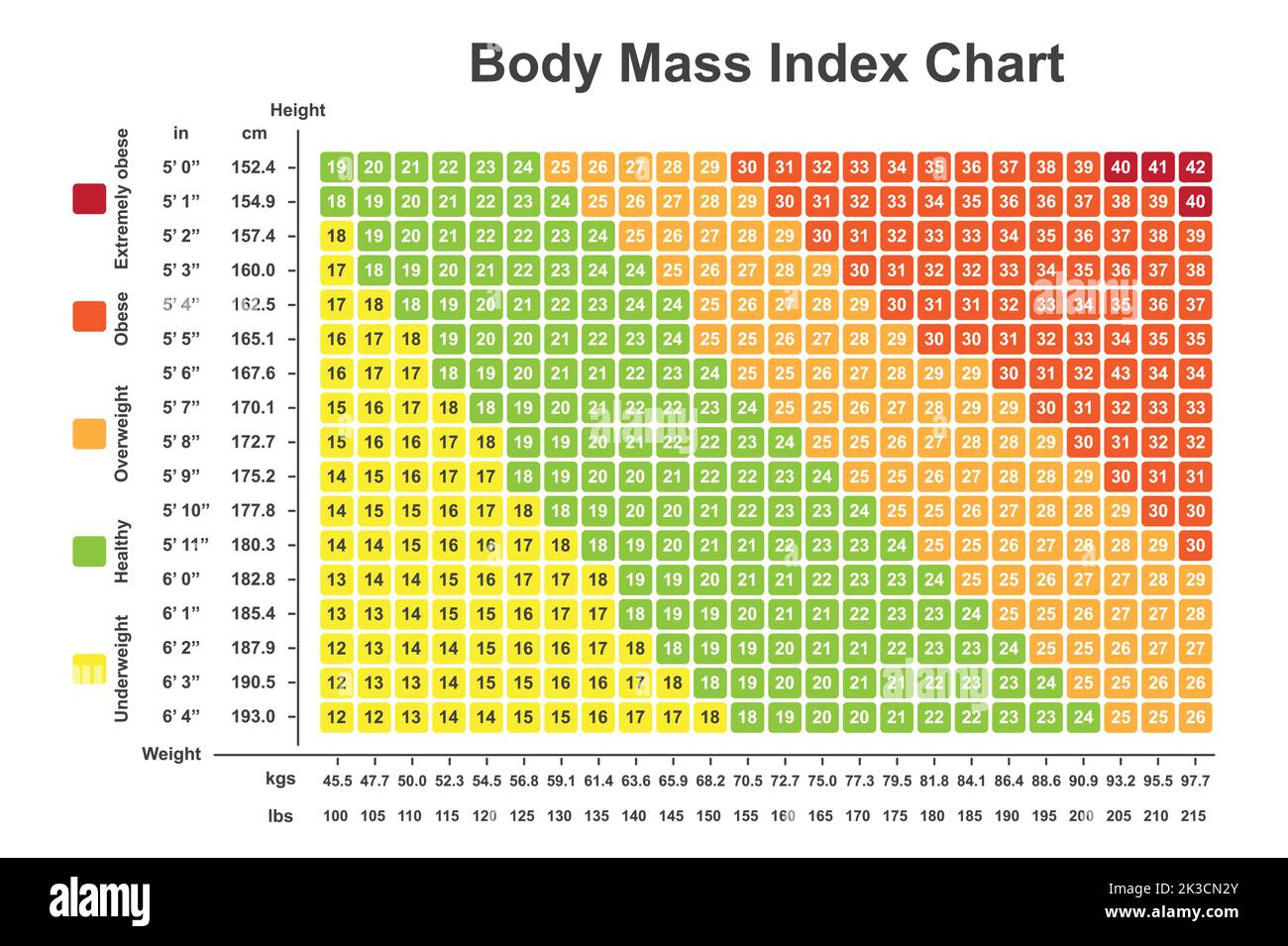
| BMI Range | Category |
|---|---|
| Below 18.5 | Underweight |
| 18.5 – 24.9 | Healthy Weight |
| 25.0 – 29.9 | Overweight |
| 30.0 and above | Obese |
Why Understanding the Formula Matters
Knowing how the BMI calculation formula works helps you:
- Verify results from online calculators
- Understand why your BMI changes when you gain or lose weight
- Explain your results to others
- Avoid relying only on apps without understanding the math
How Age and Other Factors Affect BMI Results
While the formula itself doesn’t include age, your interpretation of the result should consider:
- Age (muscle loss after 40+)
- Muscle mass (athletes often have higher BMI)
- Body frame size
- Overall health markers
This is why many people also use a bmi calculator with age or combine BMI with body fat percentage.
Recommended Tools
Frequently Asked Questions
What is the most accurate BMI formula? The metric formula is generally considered cleaner and less prone to unit errors.
Can I calculate BMI without a calculator? Yes, but it’s much easier and more accurate to use an online tool.
Does the formula change for children? No — the same formulas are used, but results are interpreted using age-specific percentile charts.
How often should I calculate my BMI? Every 4–8 weeks is ideal when actively working on weight or fitness goals.
Ready to calculate your BMI? Use Our Free BMI Calculator →