BMI Calculator for Adults: Complete Guide with Age and Gender Considerations (2026)
A BMI calculator for adults is one of the most commonly used tools for assessing weight status. While the basic calculation is the same for everyone, how we interpret the results can vary significantly depending on age and gender.
In this complete guide, you’ll learn how to use a BMI calculator for adults effectively, how age and gender influence results, and how to combine BMI with other metrics for better health insights.
How BMI Works for Adults
The formula for calculating BMI in adults is straightforward:
Metric: BMI = weight (kg) ÷ [height (m)]² Imperial: BMI = [weight (lbs) ÷ height (in)²] × 703
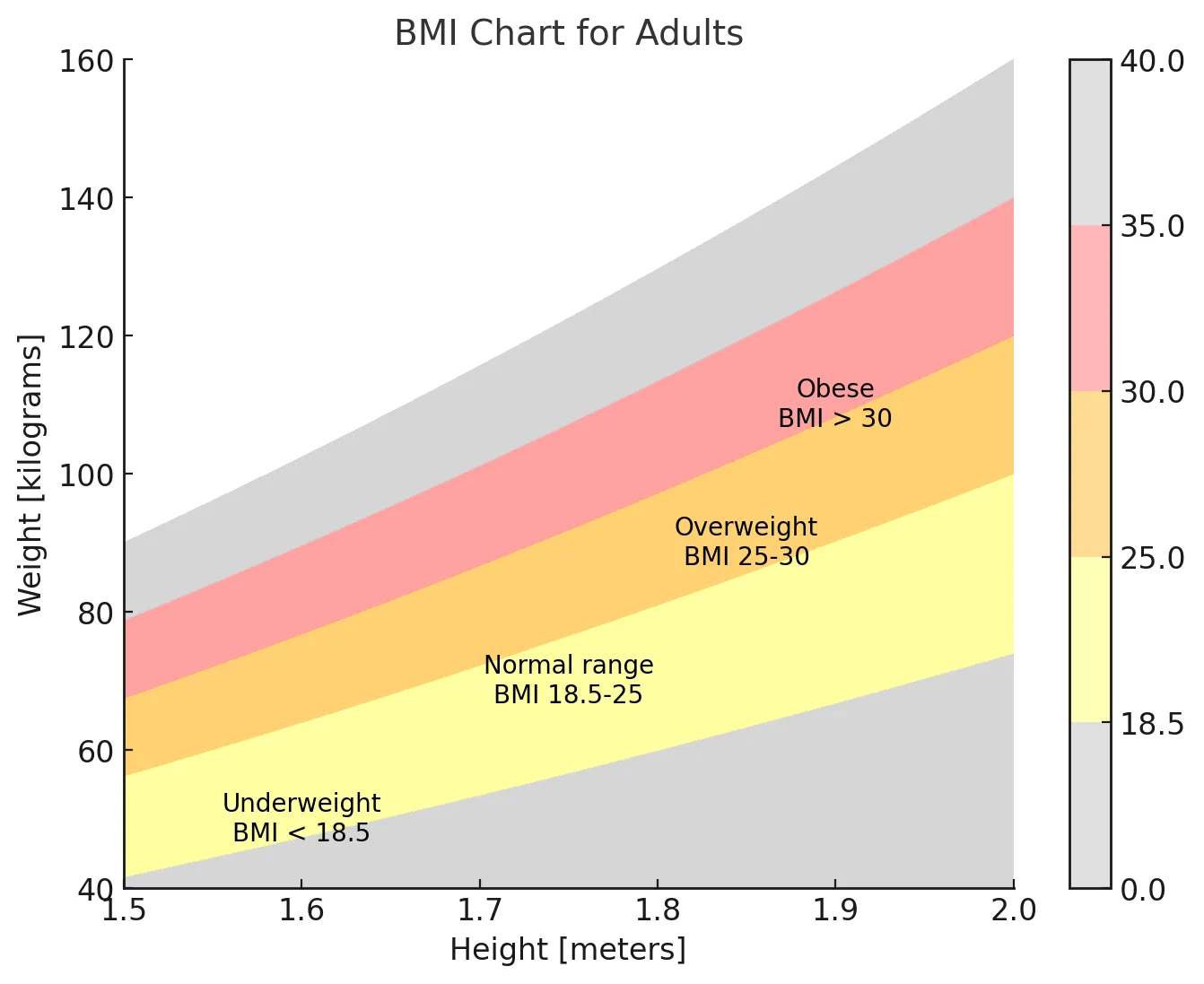
After calculating, adults are placed into standard categories:
| BMI Range | Category |
|---|---|
| Below 18.5 | Underweight |
| 18.5 – 24.9 | Healthy Weight |
| 25.0 – 29.9 | Overweight |
| 30.0 and above | Obese |
However, these categories don’t tell the full story — especially when age and gender are considered.
How Age Affects BMI Interpretation in Adults
As adults age, body composition naturally changes:
Ages 20–39
- Muscle mass is usually at its highest.
- Standard BMI categories are most accurate in this age group.
Ages 40–59
- Muscle mass begins to decline if not maintained through strength training.
- A BMI in the “overweight” range may partly reflect muscle loss rather than fat gain.
Age 60+
- Muscle loss accelerates (sarcopenia).
- A slightly higher BMI can sometimes be protective.
- Very low BMI becomes more concerning due to frailty risk.
This is why many adults look for a bmi calculator with age for more relevant insights.
How Gender Affects BMI
Women
- Naturally carry more body fat than men (about 10% more on average).
- A BMI on the higher end of the “healthy” range can still be normal.
- Hormonal changes during menopause can affect weight distribution.
Men
- Generally have more muscle mass.
- A BMI in the overweight range can sometimes reflect muscle rather than fat.
- Men tend to store more visceral fat around the abdomen.

Best Practices for Using a BMI Calculator for Adults
- Calculate regularly (every 4–8 weeks) to track trends.
- Combine with waist circumference — this is especially important after age 40.
- Consider body fat percentage for a more accurate picture.
- Factor in your activity level and muscle mass.
- Talk to your doctor if your BMI is consistently outside the healthy range.
Recommended Tools for Adults
Frequently Asked Questions
Does BMI change with age for adults? The calculation stays the same, but the health implications and ideal ranges can shift as you get older.
Is BMI different for men and women? The formula is the same, but interpretation should consider natural differences in body composition.
Can I have a high BMI but still be healthy? Yes, especially if you have high muscle mass. This is why combining BMI with other metrics is recommended.
Ready to check your BMI? Use Our Free BMI Calculator →