BMI Calculator for Kids and Teens: Free Tool, Percentile Chart & Complete Guide (2026)
As a parent, you want the best for your child’s health. One of the most common tools used by pediatricians to assess whether a child is at a healthy weight is the BMI calculator for kids and teens. However, calculating and interpreting BMI for children is very different from how it’s done for adults.
Unlike adults, where a single BMI number determines the category, children’s BMI is evaluated using percentiles that account for age and sex. This makes a specialized BMI calculator for kids essential.
In this complete guide, you’ll learn exactly how to calculate BMI for children and teens, how to read percentile charts, what the results mean, and how to support your child’s healthy growth.
Calculate Your Child’s BMI Now →

Why BMI for Kids and Teens is Different from Adults
For adults, BMI uses fixed categories. For children and teens (ages 2 to 19), BMI is compared to other children of the same age and sex. This is because kids are still growing, and their body composition changes rapidly.
The Centers for Disease Control and Prevention (CDC) provides growth charts that show BMI percentiles. These percentiles help determine whether a child is underweight, healthy weight, overweight, or obese relative to their peers.
This age- and sex-specific approach is why using a regular adult BMI calculator for kids can give misleading results.
How to Calculate BMI for Kids and Teens
The mathematical formula is the same as for adults, but the interpretation is different.
Metric Formula: BMI = weight (kg) ÷ [height (m)]²
Imperial Formula: BMI = [weight (lb) ÷ height (in)²] × 703
Step-by-Step Example 1: 8-Year-Old Girl
- Weight: 28 kg
- Height: 1.25 m
Calculation: 28 ÷ (1.25 × 1.25) = 17.92
This BMI number is then plotted on the CDC growth chart for girls aged 8. If she is in the 60th percentile, she falls within the healthy weight range.
Step-by-Step Example 2: 14-Year-Old Boy
- Weight: 65 kg
- Height: 1.65 m
Calculation: 65 ÷ (1.65 × 1.65) ≈ 23.9
On the boys’ growth chart for age 14, this might place him in the 85th–90th percentile, which falls into the overweight category.

Understanding BMI Percentiles for Children
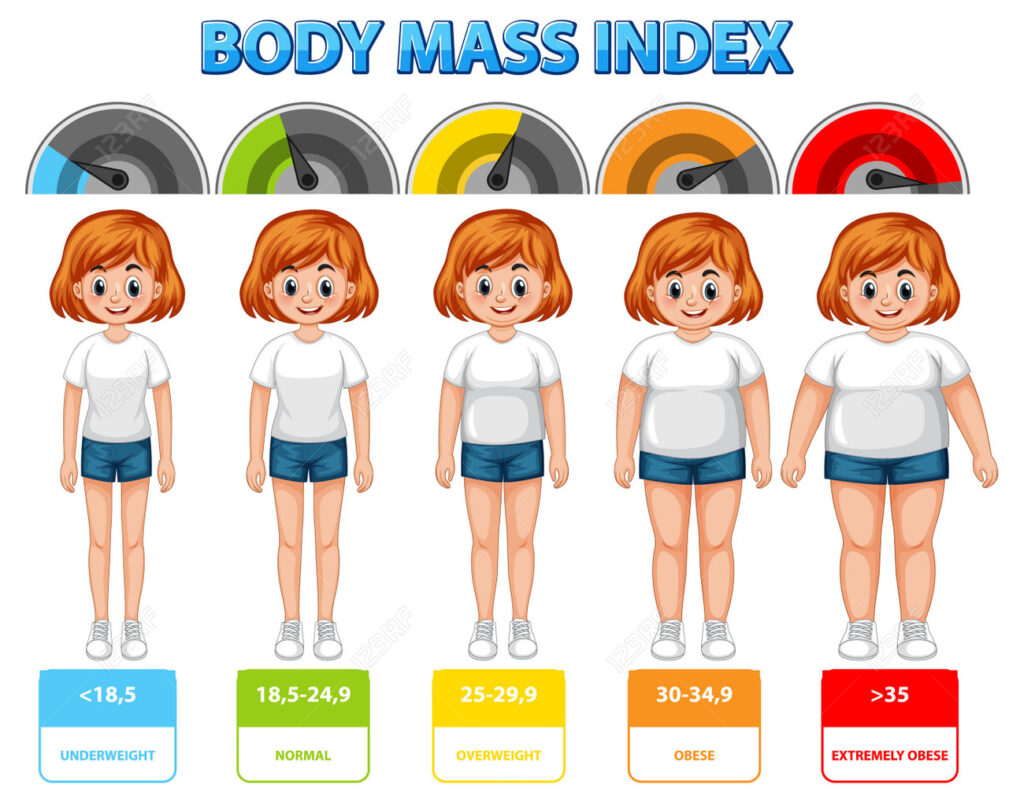
After calculating the BMI, the next step is finding the percentile. Here’s what the categories mean according to the CDC:
| Percentile | Category | What It Means | Recommended Action |
|---|---|---|---|
| Less than 5th | Underweight | Lower weight than 95% of peers | Consult pediatrician |
| 5th to 85th | Healthy Weight | Normal range for age and sex | Maintain balanced diet and activity |
| 85th to 95th | Overweight | Higher than 85–95% of peers | Review lifestyle habits |
| 95th and above | Obese | Higher than 95% of peers | Medical evaluation recommended |

Special Considerations for Different Age Groups
Toddlers (Ages 2–5)
Growth is very rapid during these years. A high or low BMI can sometimes reflect a growth spurt rather than a problem. Regular check-ups are important.
School-Age Children (Ages 6–12)
This is when lifestyle habits (screen time, diet, physical activity) start having a bigger impact. BMI trends over time are more important than a single reading.
Teens (Ages 13–19)
Puberty causes major changes in body composition. Boys gain more muscle, while girls gain more body fat. These natural changes can temporarily affect BMI percentiles.
Athletic Kids and Teens
Children involved in sports (especially strength or endurance sports) may have higher BMI due to increased muscle mass. In these cases, body composition analysis is more useful than BMI alone.
Limitations of BMI in Children
While BMI is a useful screening tool, it has limitations:
- It does not measure body fat directly.
- It does not account for muscle mass vs. fat mass.
- It can be misleading for very tall or very short children.
- It doesn’t consider overall health, fitness level, or family history.
Because of these limitations, pediatricians often combine BMI with other assessments such as:
- Waist circumference
- Growth patterns over time
- Diet and physical activity evaluation
- Blood pressure and lab tests when needed
How Parents Can Support Healthy Growth
If your child’s BMI is outside the healthy range, focus on sustainable habits rather than restrictive diets:
- Encourage regular physical activity (at least 60 minutes daily)
- Promote balanced meals with plenty of vegetables, fruits, whole grains, and lean protein
- Limit sugary drinks and processed snacks
- Ensure adequate sleep (very important for hormone regulation)
- Model healthy behavior as a family
- Avoid labeling foods as “good” or “bad”
When to See a Doctor
Contact your pediatrician if:
- Your child’s BMI is consistently below the 5th or above the 95th percentile
- You notice rapid weight changes
- There are concerns about eating habits or body image
- Your child shows signs of fatigue, low energy, or emotional distress related to weight
Recommended Tools for Parents
- Free BMI Calculator
- BMR Calculator — helpful for family meal planning
- Ideal Weight Calculator
- Macro Calculator
Frequently Asked Questions
How often should I check my child’s BMI? Most pediatricians check at regular well-child visits (once or twice a year). You can track trends at home every 3–6 months.
Can a child be overweight but still healthy? Yes. Some children carry extra weight during growth spurts or have higher muscle mass. Overall health and habits matter more than the number alone.
Is BMI accurate for very athletic kids? BMI can overestimate weight status in muscular children. Body fat percentage or waist measurement provides better insight.
What should I do if my child’s BMI is high? Focus on healthy lifestyle changes as a family. Avoid restrictive diets. Consult your pediatrician for personalized guidance.
Is there a different BMI chart for boys and girls? Yes. Growth charts are sex-specific because boys and girls develop differently.
Ready to check your child’s BMI? Use Our Free BMI Calculator for Kids →