BMI vs Body Fat Percentage: Which One Should You Trust in 2026?
When it comes to tracking health and fitness, two of the most common metrics are BMI and body fat percentage. While both are useful, they measure very different things.
Many people rely only on BMI because it’s simple and fast. However, body fat percentage often gives a much clearer picture of actual health and fitness progress.
In this detailed guide, we’ll compare BMI vs Body Fat Percentage, explain the pros and cons of each, show real-world examples, and help you decide which metric (or combination) is best for your goals.
Calculate Your BMI → Check Your Body Fat Percentage →
What Does BMI Actually Measure?
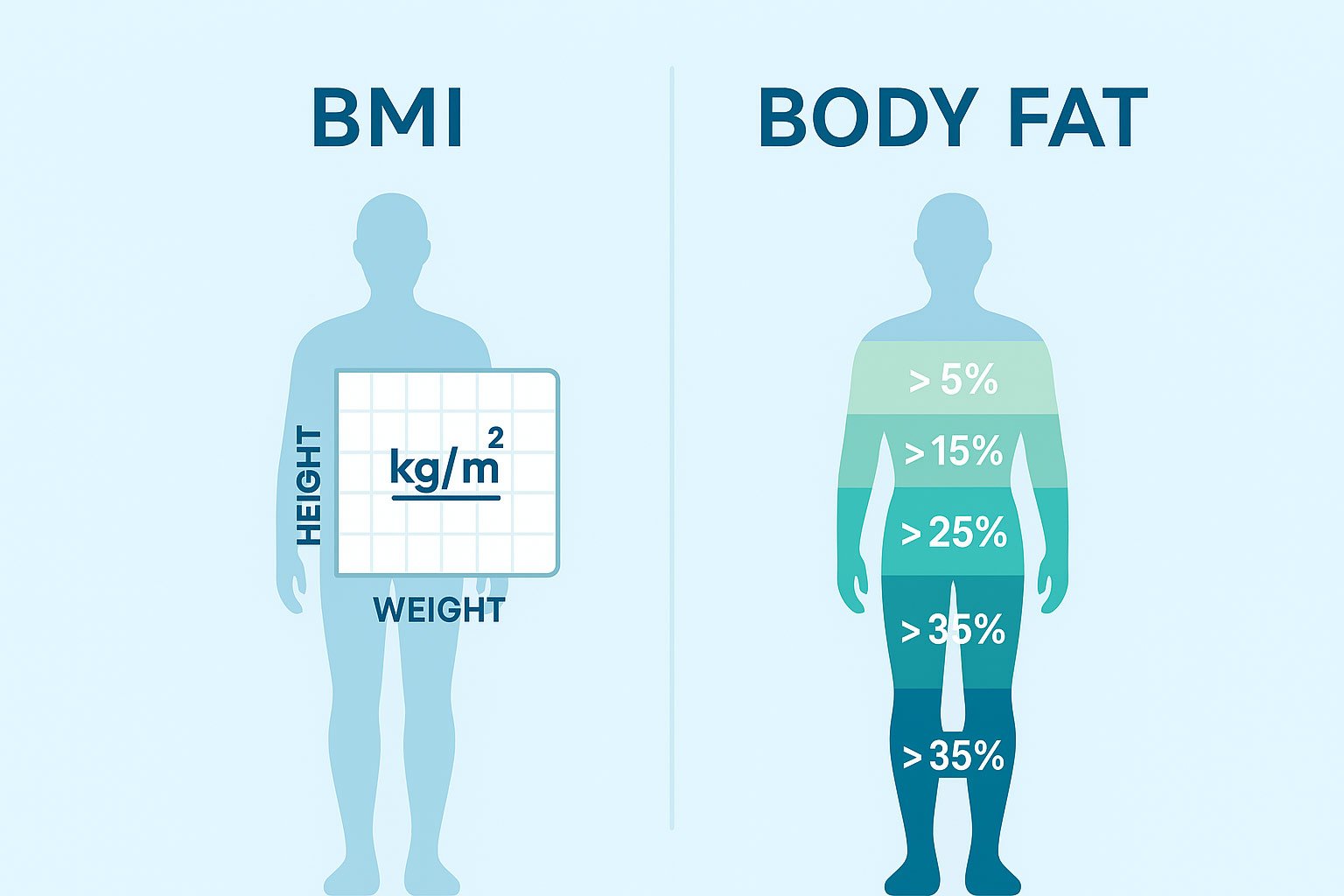
BMI (Body Mass Index) estimates body fat based on height and weight only. It’s calculated using this formula:
Metric: BMI = weight (kg) / [height (m)]² Imperial: BMI = [weight (lb) / height (in)²] × 703
Pros of BMI
- Very easy and fast to calculate
- No special equipment needed
- Useful for large population studies
- Good starting point for general screening
Cons of BMI
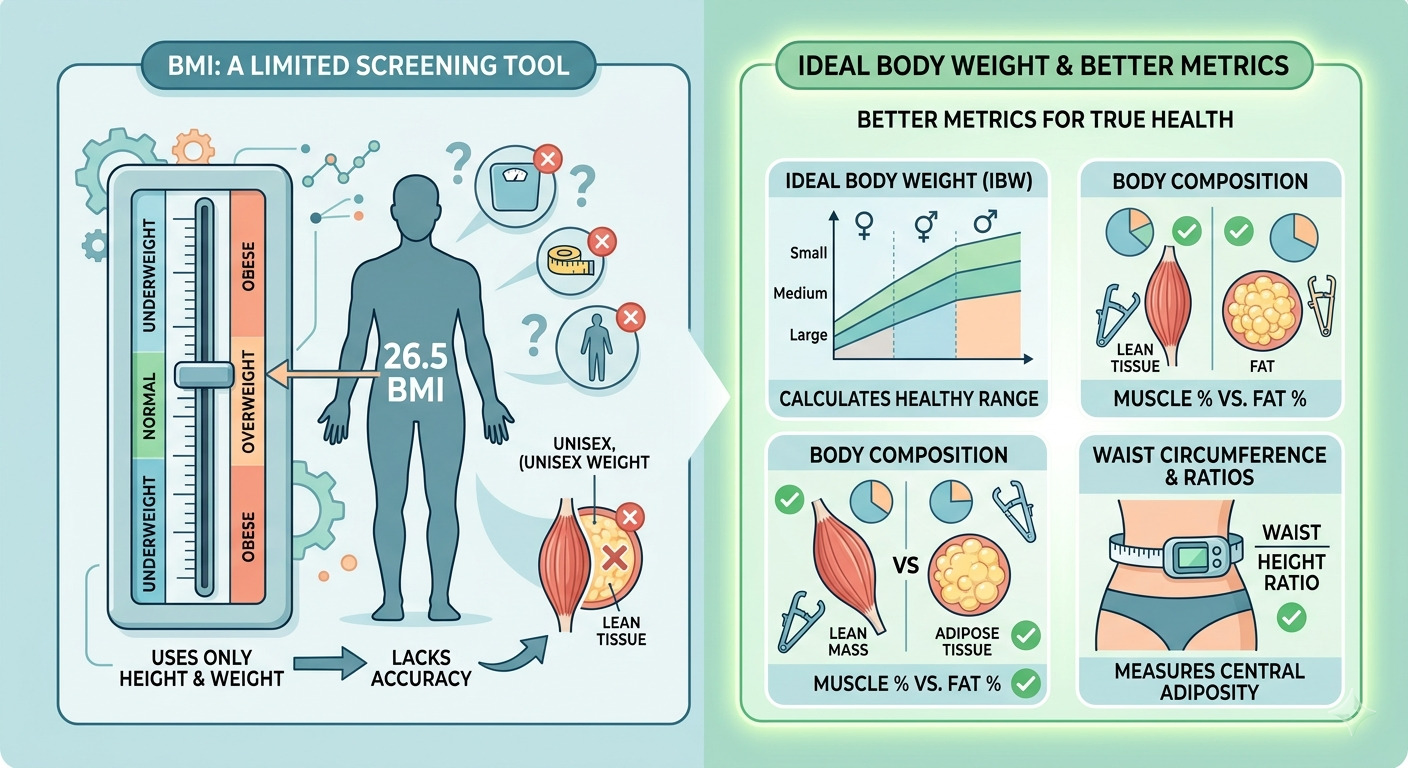
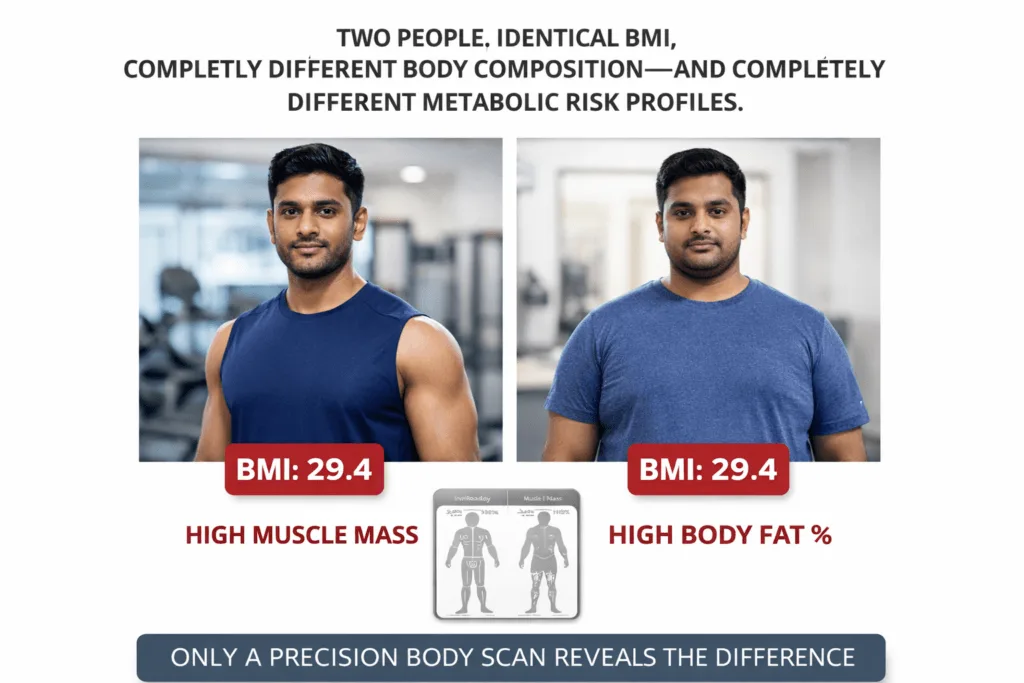
- Does not distinguish between muscle and fat
- Ignores fat distribution (visceral vs subcutaneous)
- Can misclassify muscular people as overweight or obese
- Doesn’t account well for age, sex, or ethnicity
What Does Body Fat Percentage Measure?
Body Fat Percentage shows the proportion of your total body weight that comes from fat. It gives a direct measurement of body composition rather than just weight relative to height.
Pros of Body Fat Percentage
- Much more accurate for assessing actual body composition
- Better for tracking fitness progress (especially when building muscle)
- Helps identify “skinny fat” individuals (normal BMI but high body fat)
- More useful for athletes and body recomposition goals
Cons of Body Fat Percentage
- Requires more accurate measurement tools (DEXA, InBody, calipers, or good smart scales)
- Can vary slightly depending on the method used
- Slightly more effort to track regularly
Real-World Examples: BMI vs Body Fat Percentage
Example 1: The Muscular Athlete
- Person A: 85 kg, 1.78 m tall → BMI = 26.8 (Overweight)
- Body Fat: 12% (Very lean and muscular)
Conclusion: BMI says “overweight,” but body fat percentage shows excellent fitness.
Example 2: The “Skinny Fat” Individual
- Person B: 70 kg, 1.75 m tall → BMI = 22.9 (Normal)
- Body Fat: 28% (High for their age and sex)
Conclusion: BMI looks fine, but high body fat increases health risks.
BMI vs Body Fat Percentage: Head-to-Head Comparison
| Factor | BMI | Body Fat Percentage | Winner |
|---|---|---|---|
| Ease of measurement | Very easy | Requires better tools | BMI |
| Accuracy for body composition | Low | High | Body Fat % |
| Useful for athletes | Often misleading | Highly accurate | Body Fat % |
| Tracks fat loss vs muscle gain | Poor | Excellent | Body Fat % |
| Identifies visceral fat risk | No | Indirectly (when combined with waist) | Body Fat % |
| Best for general population | Good starting point | Better overall picture | Body Fat % |
| Cost | Free | Free to moderate (scales/scans) | BMI |
When Should You Use BMI?
BMI is still useful when:
- You want a quick general assessment
- You don’t have access to body fat measurement tools
- You’re tracking large weight changes over time
- You’re doing population-level health screening
However, never rely on BMI alone if you’re serious about health or fitness.
When Should You Prioritize Body Fat Percentage?
Body fat percentage is better when:
- You’re building muscle or losing fat (body recomposition)
- You want to know your actual health risk
- You’re an athlete or train regularly with weights
- Your BMI doesn’t match how you look or feel
Best Practice in 2026: Use Both Together
The smartest approach is to track both metrics:
- Use BMI for a quick overview
- Use Body Fat Percentage for accurate body composition tracking
- Add Waist Circumference for visceral fat assessment
- Use BMR to understand your calorie needs
How to Measure Body Fat Percentage
Here are the most common methods ranked by accuracy:
| Method | Accuracy | Cost | Convenience | Best For |
|---|---|---|---|---|
| DEXA Scan | Very High | High | Low | Most accurate results |
| InBody / Professional | High | Moderate | Moderate | Gyms & clinics |
| Smart Scales | Moderate | Low–Moderate | Very High | Home use |
| Skinfold Calipers | Moderate | Low | High | Trainers & athletes |
| Visual Estimation | Low | Free | Very High | Rough estimate only |
Final Verdict: Which One Should You Trust?
| Your Goal | Best Metric to Trust | Recommendation |
|---|---|---|
| Quick general check | BMI | Use as a starting point |
| Building muscle / losing fat | Body Fat % | Primary metric |
| Assessing health risk | Body Fat % + Waist | Use both |
| Long-term progress tracking | Body Fat % | Best choice |
| Medical or clinical assessment | Body Fat % + other markers | More comprehensive approach |
Bottom line: BMI is outdated as a standalone metric in 2026. Body fat percentage gives you far more useful and accurate information about your body and health.
Recommended Tools